Most of us don’t think twice about what’s in the products we use every day. The washing liquid, the deodorant, the candles and what we cook with. We just buy what we’ve always bought and that’s wreaking havoc on our health.
The average woman puts over two hundred chemicals on her body before she leaves the house in the morning. Men are carrying a chemical load too, through the aftershave, the deodorant and the synthetic underwear worn all day. Most of us have no idea.
We want to share with you the practical ways we’ve started making changes in our home and heading towards a more low-tox life. The swaps we’ve made room by room, product by product, over the last decade or so. It’s taken us years to get here and we’re still learning.
Everything changes when you start asking why and making small changes because small changes made consistently are what moves the needle.
What’s Actually in Your Home
The cleaning products under your kitchen sink, the tablets you put in the dishwasher, the laundry detergent that makes your sheets smell fresh. A lot of it is carrying a load your body has to work hard to process every single day.
Your liver and kidneys are responsible for filtering everything you absorb, whether that’s through what you eat, what you breathe or what you put on your skin. When that load is consistently high, those organs are working overtime just to keep up. Over time, that chronic overload is linked to hormone disruption, gut issues, fatigue, inflammation and in more serious cases, disease.
We are the only species that sprays our food with chemicals before eating it to stop other animals from eating it first. When you sit with that for a moment, it’s hard to unsee.
We’re not here to alarm anyone. We are here to plant a seed of curiosity. Because the more you understand about what your body is being asked to process, the easier it becomes to make different choices. And those choices don’t have to happen all at once.
Rather than overwhelming you with everything at once, we’ve broken it down by area of the home so you can focus on what feels most relevant to you right now.
The Kitchen and Laundry
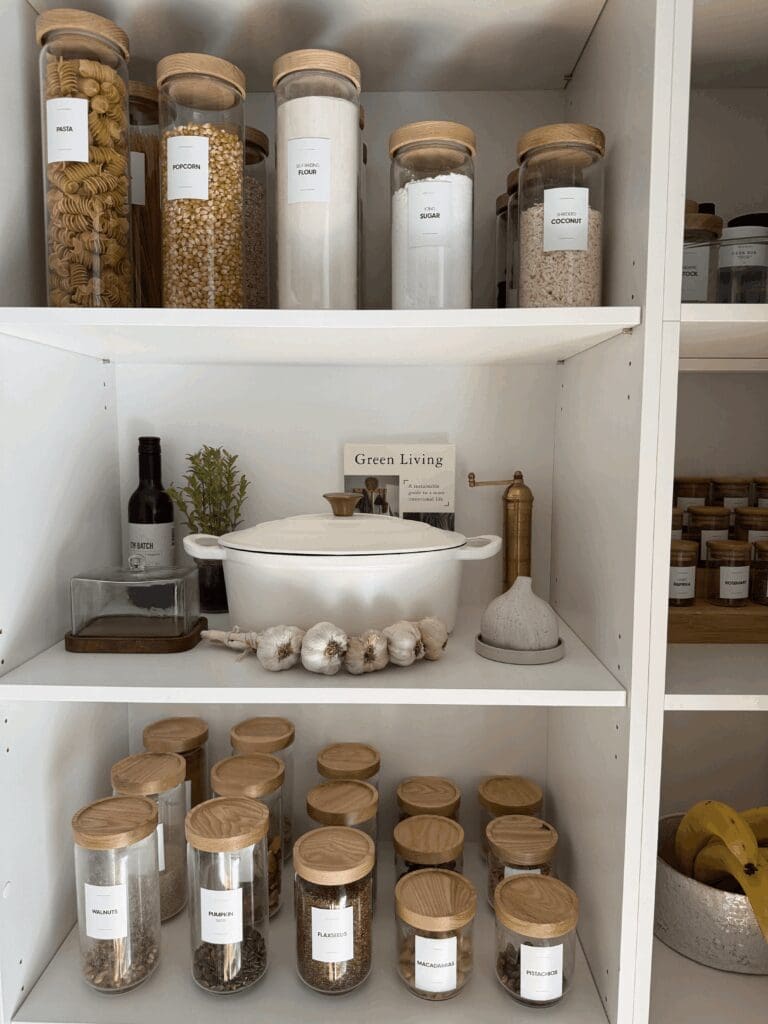
The kitchen and laundry are the two rooms we use most. We cook in them, we clean in them, we gather with family and friends in them. The kitchen, specifically, is the most important and central part of the home. And because of that, they tend to be the rooms where we’ve accumulated the most products without ever stopping to read a label or ask what’s actually in them. For us, this was the first place we looked and the first place we’d suggest you start.
Cookware and Storage
This is where most people start and it’s a good place to begin. Teflon and plastic are two of the biggest culprits in most kitchens. When Teflon cookware gets scratched or overheated, it releases forever chemicals that have been linked to hormone disruption and thyroid issues.
Plastic utensils and containers, particularly older ones or those exposed to heat, can leach compounds into food. For us, it meant phasing out Teflon cookware and replacing plastic utensils with stainless steel, timber and cast iron. Glass storage containers replaced the plastic ones.
It’s been a gradual process, but so worth it.
Dishwasher and Cleaning
The dishwasher tablets were an early swap. Most ones you find in grocery stores are wrapped in a plastic film that dissolves in the wash and is full of synthetic chemicals, including phosphates and optical brighteners that don’t break down easily. They end up on your plates, your glasses and eventually in your body. We replaced ours with a good oxygen-based powder and found one that works well at Woolworths, so it doesn’t always mean a trip to the health shop or a higher price tag. The same goes for the dishwashing liquid and hand soap. Simple swaps that make a big difference. Some great brands are Koala Eco, Skipper and Eco Store.
Laundry
The laundry is one that people tend to overlook but it’s where a lot of hidden, harmful ingredients are hanging out. Think about how much of your day you spend in contact with fabric that has been washed in heavily fragranced detergent. Your clothes, your underwear, your sheets and your towels. Those synthetic fragrances and the chemicals that carry them don’t just rinse out cleanly, they sit in the fibres and against your skin for hours at a time, particularly at night when your body is in recovery mode.
The marketing has done a brilliant job of convincing us that a strong smell equals clean. It doesn’t. We switched to a fragrance-free, low-tox laundry liquid years ago. Ours smells faintly of lemon myrtle and the sheets feel just as clean.
Produce
On the food side, fruits and vegetables get washed in the sink with bicarb soda before anything goes in the fridge. Bicarb is effective at breaking down pesticide residue and removing wax coatings. Fill the sink with cold water, add a generous amount of bicarb, let everything soak for a few minutes and rinse. It takes a few extra minutes and it’s worth building into the routine.
The Bathroom
Besides the products we use in our bathrooms, there are other harmful things that can negatively affect our health and hormones. From the water we shower in and brush our teeth with, to the mould build up (common in wet areas) and even what we dry ourselves with. These are some of the changes you can make in your home that will make a BIG impact.
Water Quality
Water quality was the first thing we addressed. Most tap water contains chlorine and fluoride, added for public health reasons, but both have been linked to thyroid disruption and other health concerns with long term exposure. We started with a shower filter, which reduces chlorine and heavy metals in the water you’re bathing in every day, then moved to a whole-house reverse osmosis system with a separate drinking tap in the kitchen. The difference in how our skin feels, particularly for sensitivity and dryness, has been noticeable. If a full system feels like too big a step, a shower filter is an affordable and easy place to start.
Towels
Most towels are made from synthetic fibres or conventionally grown cotton that has been treated with pesticides, bleaches and chemical softeners during manufacturing. Given that you’re using them on skin that has just been opened up by a warm shower, what they’re made from matters. Switching to organic cotton towels means what’s touching your skin after every shower is as clean as the shower itself.
Personal Products
Your skin is your largest organ and it absorbs a lot of what you put on it. Every product you apply, from your deodorant to your moisturiser to your toothpaste, is making its way into your body in some form. This is where the cumulative load really starts to add up! Most of these products have been sold to us through very smart marketing that kept us coming back for more. But once you read the ingredients on a lot of the products you use on the daily and do some research, you quickly come to realise how much we’ve been lied to so companies can make a quick buck while our health and hormones pay the price.
Deodorant
Deodorant is one worth paying close attention to, particularly for women. Antiperspirants contain aluminium compounds that work by blocking sweat glands. Applied daily to the underarm area, which sits directly next to the lymph nodes and breast tissue, there is a growing body of research linking aluminium exposure to hormone disruption and breast health issues. We switched to natural aluminium-free deodorant, Adrian uses MooGoo.
Oral Health
Toothpaste and toothbrushes are another easy swap. Many conventional toothpastes contain sodium lauryl sulphate, triclosan and artificial sweeteners, none of which you want absorbing through the lining of your mouth twice a day! Timber, plastic-free toothbrushes replace plastic ones and work just the same.
Adrian recenetly went to the dentist and was quoted around $2k for a deep clean after being told he had gum disease. Rather than booking straight back in, he spent four to six weeks doing oil pulling every morning. A teaspoon of coconut oil swished through the teeth for ten to fifteen minutes, then spat out on the grass rather than down the sink, where it can solidify and block drains.
Oil pulling has been used in Ayurvedic medicine for thousands of years and is thought to work by drawing out bacteria through a process called saponification.
When Adrian returned for a check-up, the dentist said his gums were perfectly healthy. A $20 jar of coconut oil from the health shop, a natural product, instead of a $2k dentist bill!
Makeup and Skincare
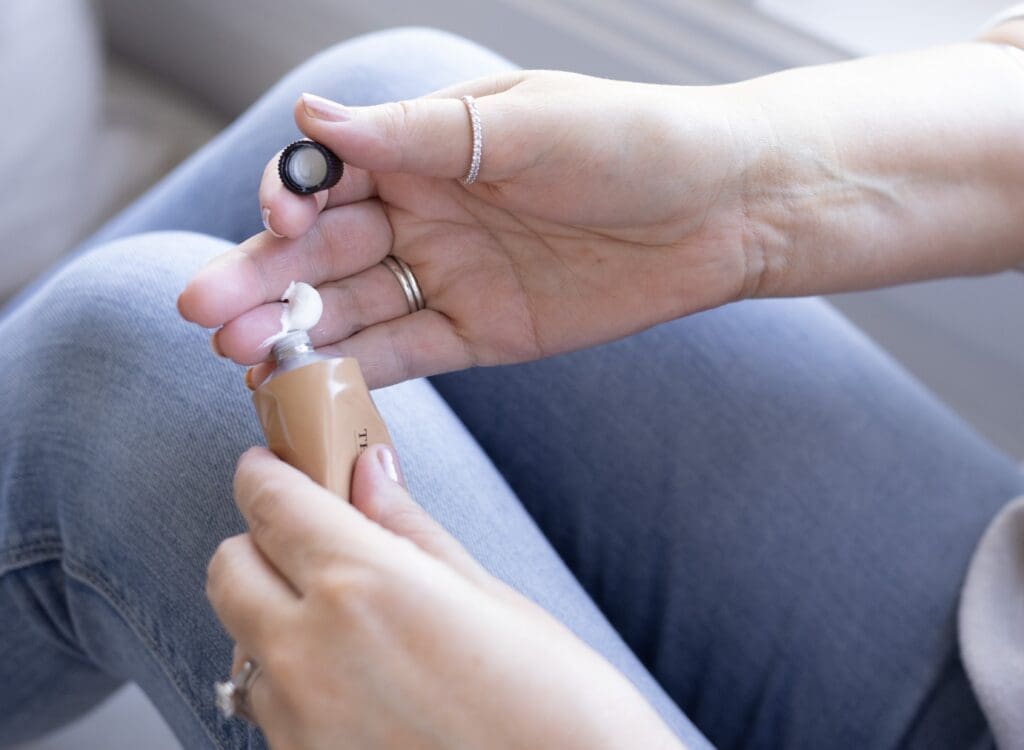
The average woman applies somewhere between 9 and 15 personal care products before leaving the house, each containing multiple chemical ingredients. Many of these, including parabens, phthalates and synthetic fragrances, are known endocrine disruptors, meaning they interfere with the body’s hormonal systems. Switching doesn’t have to mean giving up quality. Kate recently found a foundation she loves from a low-tox brand that was $30 cheaper per bottle than what she’d been using! It’s not always more expensive.
Period Products
Period products are worth mentioning, too. Many tampons contain titanium dioxide, dioxins from the bleaching process and synthetic fibres that you really don’t want in contact with one of the most absorbent areas of the body. Organic cotton options are widely available now and TOM Organic is a great option. Period underwear is another option worth looking into.
Daily Bathroom Essentials
The products the whole family reaches for every day are easily overlooked. Toilet paper is one most people don’t think about. Many major brands use chlorine bleaching and add fragrances that end up in direct contact with sensitive skin every day. We use Who Gives a Crap. Cotton ear buds are another simple swap, replacing plastic stemmed ones with a biodegradable alternative that works just as well.
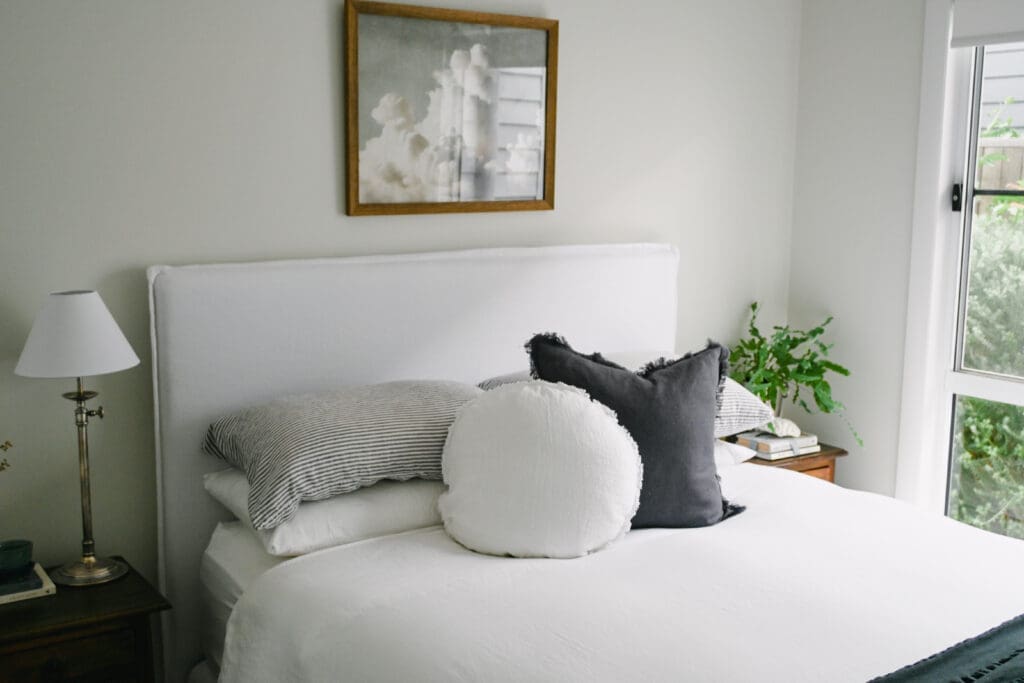
The Bedroom
The bedroom is where the body does its deepest repair work, yet it’s usually the last place people think to look when they start going low-tox. What we sleep on, sleep in and breathe while we rest has a quiet but consistent impact on how we feel.
Bedding
We spend roughly a third of our lives in bed. When you think about the hours of skin contact involved, it’s worth paying attention to what you’re sleeping in and on!
Synthetic mattress protectors, polyester sheets and heavily fragranced bedding all contribute to the overnight toxic load, particularly because your body temperature rises during sleep and your pores open. Sweating against plastic or synthetic fibres means whatever is in those materials is being absorbed while your body is supposed to be in its deepest recovery state.
We replaced the plastic mattress protector with an organic cotton one and moved to 100% linen sheets throughout. Linen is a naturally hypoallergenic, breathable fabric that regulates temperature well and has a long history of use in healing environments for good reason. We’ve recently added a wool doona insert handmade by a small business in regional Victoria, which is naturally temperature-regulating and free of the synthetic fillings found in most mass-produced doonas.
We also use a grounding sheet on the bed, which connects to the earth’s electrical field via a wall socket. Earthing or grounding has a growing body of research behind it, including studies showing benefits for inflammation, sleep quality and nervous system regulation. It sounds unconventional until you look at the research and try it for yourself.
Candles and Fragrance
When it comes to home fragrances such as candles, most conventional ones are made from paraffin wax, which is a petroleum byproduct, and synthetic fragrance oils. Burning these regularly in an enclosed space is not far off having a small chemical diffuser running in your home. If you love candles, look for ones made from beeswax or soy with essential oil fragrances. The difference in air quality is real!
Is Going Low-Tox Expensive?
This is the question we get most often. Not everything costs more. Some things do. Water filtration is a genuine investment and there’s no way around that but a lot of the product swaps are cost-neutral or cheaper once you approach them differently.
Buying in bulk is one of the biggest ways to reduce costs. Once you’ve found products you trust, buy more of them at once.
We do a quarterly stock up on household and personal care items rather than adding things to the grocery list every week. It simplifies life, means we’re never caught without the basics and allows us to take advantage of sales. We keep a small storage area stocked with the things we use regularly and it takes the decision fatigue out of shopping entirely.
Making your own cleaning products is simpler than it sounds and dramatically cheaper. White vinegar and water makes a great window and surface cleaner. Bicarb soda is a natural abrasive for scrubbing. Castile soap diluted in water works as a multipurpose cleaner. There are good books and resources on this and it’s something we’re doing more of.
Some health food shops are expensive. Others are very reasonably priced. It pays to shop around, get to know your local options and use online stores for the products you buy regularly. The organic and low-tox market has grown significantly and the pricing has become much more competitive as a result.

The Holistic Work That Goes Deeper
Low-tox living isn’t only about what’s in the cupboards. The chemical and physical changes matter, but the emotional and energetic ones are just as significant, and in our experience, they support each other. You can clean up everything in your home and still carry a load that affects your health if you’re not doing the inner work alongside it.
Kinesiology
Kinesiology has been one of the most powerful tools for both of us. Unlike talk therapy, which works primarily through the conscious mind, kinesiology works through the body to access and release stored emotional patterns and conditioning. Stress, grief, fear, old conditioning from parents, past relationships and workplaces. All of it gets held in the nervous system and the body. Kinesiology helps to locate and shift those patterns in ways that can produce quite profound changes in how you feel physically and emotionally. We both go regularly and notice the difference.
Cycle Planning
Cycle planning has been transformative for Kate. Most women are conditioned to operate at the same pace and output level every day of the month, which is fundamentally at odds with how the female body is designed to function. The menstrual cycle moves through four distinct phases, each with its own hormonal profile, energy level and cognitive strengths. Learning to plan work, rest, social commitments and creative projects around those phases rather than fighting against them has changed how Kate manages her energy, her business and her overall sense of wellbeing. If you’re a woman who hasn’t looked into this, it’s one of the most practical and immediate things you can do for your health!
Human Design
Human design is something we both use and share on our retreats. It’s a system that maps how you’re individually wired based on your birth data, covering things like how you make decisions, how you use and recover energy, what environments support you and how you naturally show up in relationships and work. For anyone familiar with Myers-Briggs or similar, think of it as that, but with more depth. It’s helped us understand ourselves and each other in ways that have genuinely changed how we work and live together.
Where to Start
Not with everything. With one thing.
Pick the area of your home or daily routine that feels most manageable and start there.
Maybe it’s swapping the dishwasher tablets. Maybe it’s your deodorant. Maybe it’s washing your fruit and vegetables in bicarb before they go in the fridge. The point isn’t to overhaul EVERYTHING by next week. It’s to get curious, make one small swap and notice what shifts.
What we’ve learned is that the changes compound.
One swap leads to a question, which leads to another swap, which leads to a different way of thinking about your home and your body altogether. It doesn’t happen overnight. It’s taken us the better part of a decade to get to where we are now and we’re still learning and adjusting as we go.
We do this because we’re playing a long game. The eighty-five-year-old version of ourselves deserves the best chance we can give them now.
Listen to Episode 05, The Holistic Overhaul That Will Change Your Home And Health, on Apple Podcasts or Spotify.
Until next time,